Continued From Previous Page:
 |
Intermission Magazine |
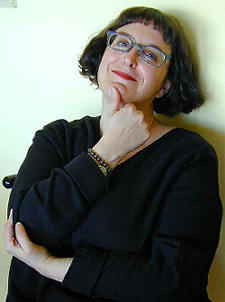
March 2000 What is your position(s) in the arts; what roles do you currently play? I am the Artistic Director of That Uppity Theatre Company, founded in 1989 to put the principles of cultural diversity into innovative theatrical practice. I am also a playwright, director, teacher, social activist, and bona-fide shit disturber. Have you always worked primarily in the Arts field or did you have other "non-art" occupations in the past? I have always been an artist, but, out of fear, economic necessity, curiosity, or cultural brain-washing, I have pursued a number of other occupations. I was, for example, the world's worst waitress. Other jobs at which I excelled a little more have included working as a journalist, art historian, television producer, and even being a vice-president of an advertising agency. All of these were interesting in their own way, but it's difficult to drive a car in two directions and one only has so much time on the planet. Happily, I found my way to the theater, which more clearly incorporates several of my passions including aesthetics, narrative, community, politics, and social change. How did those positions compare (or moreover differ) from what you are doing now? I work much harder and make much less money than any of my previous jobs, well, except maybe waitressing. But, despite the many challenges, I love what I do. I wake in the morning with a sense of purpose and possibility. And I can, and do, dress down in the "office." Can't beat that! The arts community often relies on the kindness of volunteers to fulfill their needs. On your projects do you work with a lot of volunteers? How many of them are men and how many are women? Explain. I don't look at people as volunteers. I consider them participants. In The DisAbility Project, for example, everyone is a valued participant and volunteers to be one. Most of us also donate additional energies into some of the tasks that are necessary to keep our Project and group going, such as exploring potential spaces for us to perform in, or generating mailing lists. In the more usual sense of volunteerism, our box-office staff and ushers for the Alternate Currents/Direct Currents series are usually volunteers. The so-called gender of these ushers frankly depends upon the nature of the show. In your field(s), do you prefer working with men or women? Explain. I prefer working with people who have open hearts, inquiring minds, and a minimum of pre-conceptions. It is true that in this male-dominated culture, some men are uncomfortable with women in an authority position. But in the arts in particular, I find this to be less common. And besides, my personal style and philosophy of working is a shared authority and one that gives a lot of ownership and responsibility to people that I work with. My background is in the visual arts; I view this medium as male-dominated (in museums, galleries, studios and universities). Is this true of the theater community as well? That depends upon which aspect of the theater community you are addressing. The majority of artistic directors and literary managers in this country are male and that may well be a reason why less work by women writers and directors is produced. Thankfully, this is changing; but change takes time. And it's one of the reasons why I started my own company. I wanted to move beyond the perceived norm and to give more expression to work by and about women, gays and lesbians, artists of color, and people with disabilities. Have you ever felt the need to act more masculine in order to prove yourself as a leader in the Arts? No. But I have felt a pressure to act more "feminine" in socially prescribed ways. And also, perhaps equally significant, to suppress certain aspects of my ethnicity. What, if you don't mind me asking, are the certain aspects of your ethnicity? I am Jewish and believe that I "read" as such. I also have certain personal qualities that are stereotypically associated with Jews, such as verbal acuity, assertiveness, particularly when it is something that I feel impassioned about, and an intellectual bent. Those qualities are not always valued. You've been quite successful as an Arts Champion in your many roles and as a "shit disturber." I.e. through the performance arts, you've introduced a lot of social, controversial issues to the citizens of St. Louis (often perceived as a conservative audience), but you've managed to do this and maintain a positive light on yourself and your work. How have kept from pissing so many people off in St. Louis that they wouldn't want to support or moreover fund your projects? Great question! As I said before, I think change takes time. I have worked hard to build up a substantial track record, not only with funders, but with audience members and the community as a whole. I am aware that in coming to the theater, I'm asking people to go on a journey with me. It's easier to take certain bends and twists in the road if we have been traveling together for a while. Also, while the electronic media is largely unresponsive to the arts, I've had the benefit of a fairly sophisticated print media who have been quite supportive of my work. This critical reception that creates a context for work of a more provocative or controversial nature, has been invaluable. Now, plug the projects you're currently working on. At this point in my life, I really try to only take on projects that I love and feel fully invested in. The process of selecting, marketing, or creating work is so time consuming and financially risky, that it's important to do something you really believe in. I love all the projects I'm currently involved with. These include:
The DisAbility Project |
| Click here to visit Intermission Magazine. |